Wednesday, June 23, 2010

Talong - (Eggplant) - Solanum Melongena Linn. Parts used: root


Talong is cultivated throughout the Philippines, and is common on Mt. Banahaw. In the Philippines, the Talong roots are taken as a decoction internally as an antiasthmatic and general stimulant. The roots are also used in treatment of skin diseases
Duhat - (Black Plum/Java Plum) - Syzygium Cumini Skeels Parts used: fruit, leaves, bark, seeds

Duhat is a fruit tree found mostly wild throughout the Philippines. Duhat seeds are known for the treatment of diabetes, as are the leaves and the juice from the fruit. The bark is astringent and in decoction is used as a mouthwash and as a gargle for ulcerations of the mouth. For more information on Duhat
Darangita - (Mandarin Orange, or Tangerine Orange) - Citrus Reticulata Blanco Parts used: fruit


Darangita is a fruit tree common throughout the Philippines and abundant on Mt. Banahaw. Darangita is valued for its pleasant flavor and high concentration of vitamin C. For more information on Darangita

Cacao - (Cocoa) - Theobroma Cacao Linn. Parts used: pulpy flesh from fruit


Cacao is a fruit tree cultivated throughout the Philippines, and is very abundant on Mt. Banahaw. It is most known for the seeds of its fruit, which is used to manufacture cacao, chocolate, cacao butter, etc. We use the pulpy flesh of the fruit in our Digestive Enzyme tincture, because it contains the enzymes protease, invertase, raffinase, cesease and oxydase.

Bignay – (no English) – Antidesma Bunius Linn. Parts used: fruit, leaves

Bignay is a fruit tree with small red berries. It grows wild on Mt. Banahaw. The fruit is commonly used to make jam and wine. The fruit is known for its cooling properties. The leaves are sudorific and employed in treating snakebite, in Asia. The fruit is harvested once a year, and we add fresh bignay juice to our Kombucha Health drinks during that time. For more information on Bignay

BAYABAS
(Guava) - Psidium Guajava Linn. Parts used: fruit, leaves, and bark

Bayabas is a fruit found throughout the Philippines. While the larger varieties are cultivated, most of it grows wild. It is very abundant on Mt. Banahaw in its wild form. The leaves and bark are known to be astringent, vulnerary, and antidiarrhetic. The bark is used in the chronic diarrhea of children. The fruit is known to be anthelmintic, and is used for high blood pressure, poor circulation, diabetes and asthma. The fruit also has probably the highest concentration of vitamin C of any of the tropical fruits in the Philippines. For more information on Bayabas,

Avocado - (English same) - Persea Americana Mill. Parts used: leaves and bark


The Avocado is a fruit and was introduced into the Philippines from tropical America around the 16th century. It is very common on Mt. Banahaw. It is a seasonal fruit, which contains over 20 percent fat, and more protein content than any other fresh fruit. The parts we use in our herbal formulas are the leaves and bark. The leaves and bark are used in domestic medicines because of the pectoral, stomachic, emmengague, resolutive, and antiperiodic properties ascribed to them.

Kalabasa - (Squash) - Cucurbita Maxima Duchesne Parts used: seeds

Kalabasa is a vegetable cultivated throughout the Philippines, and is common on Mt. Banahaw. Kalabasa seeds are used as an anthelmintic, which is attributed to the presence of saponin in the seeds. They are used to combat tapeworms. The seeds are also used as a diuretic for urinary diseases.

Ampalaya (Momordica charantia)


Ampalaya (Bitter Melon) with a scientific name Momordica charantia, is a climbing vine and the tendrils of which grow up to 20 centimeters long. This herbal plant belongs to the family of Cucurbitaceae, and it is a tropical as well as a subtropical vine. Ampalaya leaves are heart-shaped, which are 5 to 10 centimeters in diameter. The fruits of the ampalaya vine are fleshy green with pointed ends at length. It can never be mistaken for any other variety because its ribbed and wrinkled surface had always been ampalaya’s distinct physical structure. The bitter taste of the ampalaya fruit had also been the distinguishing factor from the rest of the fruits with medicinal value, and this is due to the presence of a substance known as momorcidin.

Ampalaya has been a folkloric cure for generations but has now been proven to be an effective herbal medicine for many aliments. Most significant of which is for Diabetes. The Philippine variety has proven to be most potent. Ampalaya contains a mixture of flavanoids and alkaloids make the Pancreas produce more insulin that controls the blood sugar in diabetics. Aside from Ampalaya's medicinal value, it is good source of vitamins A, B and C, iron, folic acid, phosphorous and calcium.

Ampalaya has been for used even by the Chinese for centuries. The effectively of Ampalaya as an herbal medicine has been tried and tested by many research clinics and laboratories worldwide. In the Philippines, the Department of Health has endorsed Ampalaya as an alternative medicine to help alleviate various ailments including diabetes, liver problems and even HIV. Aside from these, ampalaya also helps treat skin diseases and cough. Its herbal value extends to increasing the sterility of women, in parasiticide, antipyretic, and has purgative functions, as well. Note: In large dozes, pure Ampalaya juice can be a purgative and abortifacient.

Medical uses of Ampalaya

Diabetes. Ampalaya fruits and leaves can be eaten as vegetable. Ampalaya tablets and capsules are also now available in the Philippines.

Hemorrhoids. Powdered leaves and root decoction of Ampalaya are applied to hemorrhoids as astringent.
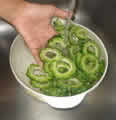
ampalayaStomach Problems. Ampalaya leaf juice is used to expel intestinal parasites, treat dysentery, diarrhea, and chronic colitis. Grounded seeds may also be used. Taken in a spoonfull 3x a day until ailment subsides.

Cough. Ampalaya leaf juice is used for mild coughs for children. Administered in a teaspoon 3x a day.

Burns, Scalds and Wounds. Pounded Ampalaya seeds or leaf are used to treat burns, scalds and wounds.

Other acclaimed uses are for the treatment of HIV, hypertension, treatment of fever and headaches, treatment of rheumatism and gout, disease of the spleen and liver.

Note: In large dozes, pure Ampalaya juice can be a purgative and abortifacient.


Ampalaya leaves are part of a tropical vine that initially gained wide use for medicinal purposes on the Philippines. Through the years, Ampalaya leaves were used to treat a number of conditions, diseases and ailments. The medicinal use of Ampalaya leaves expanded outside of the Philippines in more recent times.

    Topical Treatments

  1. Use Ampalaya leaves as a topical treatment to help resolve a number of different conditions. Ampalaya leaves are used to treat more superficial wounds and milder burns. Ampalaya leaves speed the overall healing process and also work to ease the pain associated with wounds and burns.

    As a topical treatment, mashed Ampalaya leaves are blended with a white cream or patted onto the wound or burn directly in their ground form.

    Ampalaya leaves may also be effective in aiding in the resolution of hemorrhoids. Again, the Ampalaya leaves are ground and applied directly to the hemorrhoids. They act to lessen the swelling and also as an astringent.
  2. Digestive Treatments

  3. Grind Ampalaya leaves to be used in treating certain digestive conditions and ailments. In addressing digestive issues, 1 tsp. of ground Ampalaya leaves are taken three times throughout the course of a day.

    In the Philippines, Ampalaya leaves are used to treat diarrhea and colitis. Ampalaya leaves may also be helpful in eliminating intestinal parasites and in the treatment of dysentery.
  4. Diabetes

  5. Incorporate Ampalaya leaves into your diet to aid in regulating diabetes (types I and II). Ampalaya leaves are also available in capsule form for diabetic patients. Ampalaya leaves may assist in regulating blood sugar levels in a person with diabetes.

    Before using Ampalaya leaves as part of a regimen to regulate blood sugar, consult with a doctor to ensure that using Ampalaya leaves makes sense for you and that it is an appropriate alternative remedy for your condition.
  6. Nutrition

  7. Add Ampalaya leaves to your diet to better your overall health. In addition to being effective at resolving a variety of common ailments and illnesses, Ampalaya leaves are nutritional. Ampalaya leaves are a useful dietary supplement in addition to having healing properties.

    Ampalaya leaves are rich in iron, calcium, beta carotene and vitamin B. These are all important nutrients in maintaining optimal health.

GUYABANO

Guyabano/Soursop Fruit Nutrition


Guyabano belongs to the family of Annonaceae, (A. muricata L.). The flesh of the fruit consist of a white edible pulp that is high in carbohydrates and considerable amounts of Vitamin C, Vitamin B1, Vitamin B2, Potassium and dietary fiber. Guyabano is low in cholesterol, saturated fat and sodium. No only is guyabano a good health food, it also taste delicious. The tree and fruit is known in various names: Guyabano in Filipino, Soursop in English, Graviola in Brazil, and Guanabana in Spanish.

About the Guyabano

The heart shaped / oblong guyabano fruit has a dark green, leathery and spike-like skin that measures from 8 to 12 inches long and can weigh up to 2.5 kilos. The creamy and delectable flesh contains from 60 to 100 black-brown seeds that are indigestible and non-edible.

The guyabano tree is relatively small. It usually grows from 8 to less than 20 feet high and is sensitive to very cold temperatures. The guyabano tree requires a lot of water, warmth and humidity and is usually grown in the tropics. It is cultivated commercially in Central & South America, West Africa, Asia and South Florida in limited numbers.

Products made from Guyabano fruit:
Aside from being eaten raw, the guyabano fruit is processed into candies, tarts, shakes, ice-cream, sherbets and other beverages.

Medicinal Uses of Guyabano
Guyabano has been used as folkloric herbal medicine in many regions thought the world. It is considered to be antispasmodic, sudorific and emetic. A decoction (boiling in water) of guyabano leaves is used to kill bedbugs and head lice.

To reduce fever, a decoction of leaves can be taken internally or the leaves added to bathing water also has the same effect. The crushed fresh leaves are also applied on skin eruptions for faster healing. A poultice of young guyabano leaves is applied on the skin to alleviate rheumatism and other skin infections like eczema. Applied during the healing of wounds, this can result in less or no skin scars. The decoction can also be used as a wet compress on swollen feet and other inflammations.

The juice of the fruit is taken orally as a herbal remedy for urethritis, haematuria and liver ailments.

Studies are underway by leading medical institutes, universities and pharmaceutical companies of the healing properties of guyabano against cancers. Initial findings show that certain compounds and chemicals extracted from guyabano leaves, seeds, fruit and bark appear to kill cancer cells while leaving normal cells remain unaffected.

Other uses of Guyabano
Pulverizing the guyabano seeds and mixing it with soap & water is used as effective spray against caterpillars, armyworms and leafhoppers on plants.

The guyabano leaves are believed to have a tranquilizing and sedative properties. In the Netherlands Antilles, the leaves are placed inside pillows or placed on top of the mattress to induce a good night's sleep.

Guyabano Nutritional Value*

Per 100g of edible portion

Calories - 65
Protein - 1.0 g
Fat - 0.95g
Carbohydrates - 16.5g
Fiber - 3.2 g
Ash - 58g
Calcium - 10.3 mg
Phosphorus - 26.9 mg
Potassium - 270 mg
Iron - 0.64 mg
Vitamin A - 2 IU
Vitamin C - 28.5 mg
Thiamine - 0.10 mg
Riboflavin - 0.06 mg
Niacin - 1.3 mg
Tryptophan - 11 mg
Methionine - 8 mg
Lysine - 60 mg


Fruit Shake


A basic recipe to a healthy drink for breakfast or snack.

Ingredients:
1 cup fruit guyabano sliced
6 tbsp. CARNATION Non-Fat Milk
honey to taste
enough cold water/cracked ice to suite desired consistency

Procedure:
Combine ingredients in a blender and process for about 1 min. Serve on chilled glasses.