Kalabasa- (Squash) - Cucurbita MaximaDuchesne Parts used: seeds Kalabasa is a vegetable cultivated throughout the Philippines, and is common on Mt. Banahaw. Kalabasa seeds are used as an anthelmintic, which is attributed to the presence of saponin in the seeds. They are used to combat tapeworms. The seeds are also used as a diuretic for urinary diseases.
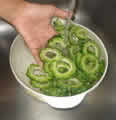
Ampalaya (Bitter Melon)with a scientific name Momordica charantia, is a climbing vine and the tendrils of which grow up to 20 centimeters long. This herbal plant belongs to the family of Cucurbitaceae, and it is a tropical as well as a subtropical vine. Ampalaya leaves are heart-shaped, which are 5 to 10 centimeters in diameter. The fruits of the ampalaya vine are fleshy green with pointed ends at length. It can never be mistaken for any other variety because its ribbed and wrinkled surface had always been ampalaya’s distinct physical structure. The bitter taste of the ampalaya fruit had also been the distinguishing factor from the rest of the fruits with medicinal value, and this is due to the presence of a substance known as momorcidin.
Ampalaya has been a folkloric cure for generations but has now been proven to be an effective herbal medicine for many aliments. Most significant of which is for Diabetes. The Philippine variety has proven to be most potent. Ampalaya contains a mixture of flavanoids and alkaloids make the Pancreas produce more insulin that controls the blood sugar in diabetics. Aside from Ampalaya's medicinal value, it is good source of vitamins A, B and C, iron, folic acid, phosphorous and calcium.
Ampalaya has been for used even by the Chinese for centuries. The effectively of Ampalaya as an herbal medicine has been tried and tested by many research clinics and laboratories worldwide. In the Philippines, the Department of Health has endorsed Ampalaya as an alternative medicine to help alleviate various ailments including diabetes, liver problems and even HIV. Aside from these, ampalaya also helps treat skin diseases and cough. Its herbal value extends to increasing the sterility of women, in parasiticide, antipyretic, and has purgative functions, as well. Note: In large dozes, pure Ampalaya juice can be a purgative and abortifacient.
Medical uses of Ampalaya
Diabetes. Ampalaya fruits and leaves can be eaten as vegetable. Ampalaya tablets and capsules are also now available in the Philippines.
Hemorrhoids. Powdered leaves and root decoction of Ampalaya are applied to hemorrhoids as astringent.
Stomach Problems. Ampalaya leaf juice is used to expel intestinal parasites, treat dysentery, diarrhea, and chronic colitis. Grounded seeds may also be used. Taken in a spoonfull 3x a day until ailment subsides.
Cough. Ampalaya leaf juice is used for mild coughs for children. Administered in a teaspoon 3x a day.
Burns, Scalds and Wounds. Pounded Ampalaya seeds or leaf are used to treat burns, scalds and wounds.
Other acclaimed uses are for the treatment of HIV, hypertension, treatment of fever and headaches, treatment of rheumatism and gout, disease of the spleen and liver.
Note: In large dozes, pure Ampalaya juice can be a purgative and abortifacient.
Ampalaya leaves are part of a tropical vine that initially gained wide use for medicinal purposes on the Philippines. Through the years, Ampalaya leaves were used to treat a number of conditions, diseases and ailments. The medicinal use of Ampalaya leaves expanded outside of the Philippines in more recent times.
Topical Treatments
Use Ampalaya leaves as a topical treatment to help resolve a number of different conditions. Ampalaya leaves are used to treat more superficial wounds and milder burns. Ampalaya leaves speed the overall healing process and also work to ease the pain associated with wounds and burns.
As a topical treatment, mashed Ampalaya leaves are blended with a white cream or patted onto the wound or burn directly in their ground form.
Ampalaya leaves may also be effective in aiding in the resolution of hemorrhoids. Again, the Ampalaya leaves are ground and applied directly to the hemorrhoids. They act to lessen the swelling and also as an astringent.
Digestive Treatments
Grind Ampalaya leaves to be used in treating certain digestive conditions and ailments. In addressing digestive issues, 1 tsp. of ground Ampalaya leaves are taken three times throughout the course of a day.
In the Philippines, Ampalaya leaves are used to treat diarrhea and colitis. Ampalaya leaves may also be helpful in eliminating intestinal parasites and in the treatment of dysentery.
Diabetes
Incorporate Ampalaya leaves into your diet to aid in regulating diabetes (types I and II). Ampalaya leaves are also available in capsule form for diabetic patients. Ampalaya leaves may assist in regulating blood sugar levels in a person with diabetes.
Before using Ampalaya leaves as part of a regimen to regulate blood sugar, consult with a doctor to ensure that using Ampalaya leaves makes sense for you and that it is an appropriate alternative remedy for your condition.
Nutrition
Add Ampalaya leaves to your diet to better your overall health. In addition to being effective at resolving a variety of common ailments and illnesses, Ampalaya leaves are nutritional. Ampalaya leaves are a useful dietary supplement in addition to having healing properties.
Ampalaya leaves are rich in iron, calcium, beta carotene and vitamin B. These are all important nutrients in maintaining optimal health.
Guyabano belongs to the family of Annonaceae, (A. muricata L.). The flesh of the fruit consist of a white edible pulp that is high in carbohydrates and considerable amounts of Vitamin C, Vitamin B1, Vitamin B2, Potassium and dietary fiber. Guyabano is low in cholesterol, saturated fat and sodium. No only is guyabano a good health food, it also taste delicious. The tree and fruit is known in various names: Guyabano in Filipino, Soursop in English, Graviola in Brazil, and Guanabana in Spanish.
About the Guyabano
The heart shaped / oblong guyabano fruit has a dark green, leathery and spike-like skin that measures from 8 to 12 inches long and can weigh up to 2.5 kilos. The creamy and delectable flesh contains from 60 to 100 black-brown seeds that are indigestible and non-edible.
The guyabano tree is relatively small. It usually grows from 8 to less than 20 feet high and is sensitive to very cold temperatures. The guyabano tree requires a lot of water, warmth and humidity and is usually grown in the tropics. It is cultivated commercially in Central & South America, West Africa, Asia and South Florida in limited numbers.
Products made from Guyabano fruit: Aside from being eaten raw, the guyabano fruit is processed into candies, tarts, shakes, ice-cream, sherbets and other beverages.
Medicinal Uses of Guyabano Guyabano has been used as folkloric herbal medicine in many regions thought the world. It is considered to be antispasmodic, sudorific and emetic. A decoction (boiling in water) of guyabano leaves is used to kill bedbugs and head lice.
To reduce fever, a decoction of leaves can be taken internally or the leaves added to bathing water also has the same effect. The crushed fresh leaves are also applied on skin eruptions for faster healing. A poultice of young guyabano leaves is applied on the skin to alleviate rheumatism and other skin infections like eczema. Applied during the healing of wounds, this can result in less or no skin scars. The decoction can also be used as a wet compress on swollen feet and other inflammations.
The juice of the fruit is taken orally as a herbal remedy for urethritis, haematuria and liver ailments.
Studies are underway by leading medical institutes, universities and pharmaceutical companies of the healing properties of guyabano against cancers. Initial findings show that certain compounds and chemicals extracted from guyabano leaves, seeds, fruit and bark appear to kill cancer cells while leaving normal cells remain unaffected.
Other uses of Guyabano Pulverizing the guyabano seeds and mixing it with soap & water is used as effective spray against caterpillars, armyworms and leafhoppers on plants.
The guyabano leaves are believed to have a tranquilizing and sedative properties. In the Netherlands Antilles, the leaves are placed inside pillows or placed on top of the mattress to induce a good night's sleep.
Guyabano Nutritional Value*
Per 100g of edible portion
Calories - 65 Protein - 1.0 g Fat - 0.95g Carbohydrates - 16.5g Fiber - 3.2 g Ash - 58g Calcium - 10.3 mg Phosphorus - 26.9 mg Potassium - 270 mg Iron - 0.64 mg Vitamin A - 2 IU Vitamin C - 28.5 mg Thiamine - 0.10 mg Riboflavin - 0.06 mg Niacin - 1.3 mg Tryptophan - 11 mg Methionine - 8 mg Lysine - 60 mg
Fruit Shake
A basic recipe to a healthy drink for breakfast or snack.
Ingredients: 1 cup fruit guyabano sliced 6 tbsp. CARNATION Non-Fat Milk honey to taste enough cold water/cracked ice to suite desired consistency
Procedure: Combine ingredients in a blender and process for about 1 min. Serve on chilled glasses.
GROWING healthcare costs, coupled with awareness initiatives by various stakeholders has, over the years, led to an increase in the number of people buying health insurance policies. However, since health insurance primarily takes care of hospitalisation and related costs, policyholders have to spend out of their pocket for preventive or regular, overthe-counter medical expenses. The cobranded card launched by Aditya Birla Money, in association with Indian Health Organisation, seeks to plug this need gap. FACILITIES OFFERED
Named Aditya Birla Money–IHO Health Plan Card, it allows cardholders to avail of services such as health check-ups, consultations, treatments, medicines at a subsidised rate. For instance, if a card holder goes for an oral hygiene check-up, all the examinations/consultations are offered at no cost. For any dental treatment, the discount could range between 25-30%. Buying medicines at IHO-empanelled pharmacists would fetch discounts of 8-12%. The card does not exclude pre-existing illnesses. Primary card holders are also entitled to a personal accident cover of Rs 50,000 (provided through a partnership with IFFCO-Tokio General Insurance). USAGE PROCEDURE
When card members need to get in touch with a doctor, they would need to call the IHO helpline number, and the representatives will direct them to the empanelled doctors, based on their requirement and location. The benefits will accrue to them upon flashing the card at the clinic or pharmacy. CHARGE STRUCTURE
The card is available in several variants. Under the one-year validity programme, an individual health plan (one card and two health check vouchers) would cost Rs 1,400 (excluding service tax). For a couple, the cost would work out to Rs 1,900. Similarly, you will be charged Rs 2,400 for a family health plan, which covers four individuals. Twoyear validity programmes are also available. TARGET GROUPS
According to Aditya Birla Money, the card will prove to be useful to senior citizens who do not have a health cover. Other target groups include families with young kids requiring frequent visits to the dentist, and pregnant women. The discounts on offer could offset the card membership fee over a period of 1-2 years, particularly for families with kids and elderly individuals. However, if you happen to rely on your family doctor for advice and s/he does not happen to be on the IHO's panel of professionals, this card may not be of help. Likewise, if your neighbourhood pharmacy does not feature in the list, you may not find the card attractive from the convenience perspective. Also, one needs to remember that the card cannot be deemed to be akin to a health insurance policy and IHO is a private limited organisation, not regulated by the Insurance Regulatory and Development Authority (IRDA). WHY GO FOR IT:
Subsidised rates for regular medical expenses — many of which are not covered by health insurance — could make buying the card cost-effective. WHY NOT:
Discounts are offered only if the services of IHO - empanelled medical professionals are availed of, restricting the card holders' choice.
EATING FRUIT... It's long but very informative ? We all think eating fruits means just buying fruits, cutting it and just popping it into our mouths. It's not as easy as you think. It's important to know how and when to eat. ? What is the correct way of eating fruits? ? IT MEANS NOT EATING FRUITS AFTER YOUR MEALS! * FRUITS SHOULD BE EATEN ON AN EMPTY STOMACH. ? If you eat fruit like that, it will play a major role to detoxify your system, supplying you with a great deal of energy for weight loss and other life activities. ? FRUIT IS THE MOST IMPORTANT FOOD. Let's say you eat two slices of bread and then a slice of fruit. The slice of fruit is ready to go straight through the stomach into the intestines, but it is prevented from doing so. ? In the meantime the whole meal rots and ferments and turns to acid. The minute the fruit comes into contact with the food in the stomach and digestive juices, the entire mass of food begins to spoil.... ? So please eat your fruits on an emptystomach or before your meals! You have heard people complaining — every time I eat watermelon I burp, when I eat durian my stomach bloats up, when I eat a banana I feel like running to the toilet, etc — actually all this will not arise if you eat the fruit on an empty stomach. The fruit mixes with the putrefying other food and produces gas and hence you will bloat! ? Graying hair, balding, nervous outburst, and dark circles under the eyes all these will NOT happen if you take fruits on an empty stomach. ? There is no such thing as some fruits, like orange and lemon are acidic, because all fruits become alkaline in our body, according to Dr. Herbert Shelton who did research on this matter. If you have mastered the correct way of eating fruits, you have the Secret of beauty, longevity, health, energy, happiness and normal weight. ? When you need to drink fruit juice - drink only fresh fruit juice, NOT from the cans. Don't even drink juice that has been heated up. Don't eat cooked fruits because you don't get the nutrients at all. You only get to taste. Cooking destroys all the vitamins. ? But eating a whole fruit is better than drinking the juice. If you should drink the juice, drink it mouthful by mouthful slowly, because you must let it mix with your saliva before swallowing it. You can go on a 3-day fruit fast to cleanse your body. Just eat fruits and drink fruit juice throughout the 3 days and you will be surprised when your friends tell you how radiant you look! ? KIWI: Tiny but mighty. This is a good source of potassium, magnesium, vitamin E & fiber. Its vitamin C content is twice that of an orange. ? APPLE: An apple a day keeps the doctor away? Although an apple has a low vitamin C content, it has antioxidants & flavonoids which enhances the activity of vitamin C thereby helping to lower the risks of colon cancer, heart attack & stroke. ? STRAWBERRY: Protective Fruit. Strawberries have the highest total antioxidant power among major fruits & protect the body from cancer-causing, blood vessel-clogging free radicals. ? ORANGE : Sweetest medicine. Taking 2-4 oranges a day may help keep colds away, lower cholesterol, prevent & dissolve kidney stones as well as lessens the risk of colon cancer. ? WATERMELON: Coolest thirst quencher. Composed of 92% water, it is also packed with a giant dose of glutathione, which helps boost our immune system. They are also a key source of lycopene — the cancer fighting oxidant. Other nutrients found in watermelon are vitamin C & Potassium. ? GUAVA & PAPAYA: Top awards for vitamin C. They are the clear winners for their high vitamin C content.. Guava is also rich in fiber, which helps prevent constipation. Papaya is rich in carotene; this is good for your eyes. ? Drinking Cold water after a meal = Cancer! Can u believe this?? For those who like to drink cold water, this article is applicable to you. It is nice to have a cup of cold drink after a meal. However, the cold water will solidify the oily stuff that you have just consumed. It will slow down the digestion. Once this 'sludge' reacts with the acid, it will break down and be absorbed by the intestine faster than the solid food. It will line the intestine. Very soon, this will turn into fats and lead to cancer. It is best to drink hot soup or warm water after a meal. ? A serious note about heart attacks HEART ATTACK PROCEDURE': (THIS IS NOT A JOKE!) Women should know that not every heart attack symptom is going to be the left arm hurting. Be aware of intense pain in the jaw line. You may never have the first chest pain during the course of a heart attack. Nausea and intense sweating are also common symptoms. Sixty percent of people who have a heart attack while they are asleep do not wake up. Pain in the jaw can wake you from a sound sleep. Let's be careful and be aware. The more we know the betterchance we could survive. ? A cardiologist says if everyone who gets this mail sends it to 10 people, you can be sure that we'll save at least one life.
1. The cholesterol numbers shown above are established by the American Heart Association. 2. The scales are linear. 3. The vertical alignment of the scales is arbitrary, and was done to align the white borderline areas, in order to facilitate comparisons. 4. The LDL levels shown with an asterisk are recommended for certain high-risk subjects. 5. As you can see, my cholesterol levels remained fairly stable over a 4-year period.
Do you need to lower your high cholesterol numbers? You may need to take statin drugs.
Children forced into the rat race at an early age by parents are prone to a range of health problems
Class VII student Barnali Majumder dreams of "escaping the clutches of studies" whenever her mother pressurises her to work harder.
Barnali, however, does not consider playing with friends as a way of relaxation. "I prefer cycling and swimming. I don't have time to go out and play with my friends," she says. Her mother, Jharna, a primary school teacher, says, "Gone are the days of games and sports, children don't have any time, so exercise is the best way to stay healthy." Jharna is of the opinion that exercise solves most ailments and is worried that a lack of exercise may be responsible for Barnali's eyesight problems. It is a situation that Dr Supriyo Chatterjee, a senior consultant in general and paediatric optometry, is familiar with. "Two common causes of myopia include lack of outdoor activities resulting in increased television watching or playing computer games and parental pressure which results in long study hours without any breaks," he says. Parents with no time to look after their children further deteriorate the situation. "Many mothers often switch on the TV to keep their kids busy. Such a practice often leads children to become TV addicts and the eyes suffer fromcontinued viewing," says the doctor. Parents, however, blame the intense competition in schools. "Our children have no time to play. My son studies in Class V and is so busy with school, tuition and creative writing classes that he has no time to play. We can't do much nowadays because the curriculum is so competitive," says Mandira, a housewife. Her son blames peer pressure for his schedule. "My classmates and I always talk about getting good marks in exams. I want to do better than them when I sit for an exam and feel the need to keep on studying. I am too tired to exercise as all my energy is spent rushing from one tuition to another." Experts believe that the way parents treat children plays a major role in this issue. "Children nowadays are mini adults, they aren't kids anymore. When would they have the time to play around as they are thrown into the rat race so early in life? Parents nowadays do not have adequate time to invest in their kids and hence want the kids to behave like miniature adults. They do not want the kids to play around as that would require more supervision," says clinical and rehabilitation psychologist Paromita Mitra Bhaumik. Another culprit leading to poor health in kids is fast food. Here, parents don't have the time to make a wholesome meal and kids gorge on unhealthy food. "However unlike the US and the UK, where kids feasting on fast food have numerous parks to play around, kids here do not have that option. The numbers of playgrounds is decreasing with each passing day. All these combined together leads to deteriorating physical health among children," she adds. (Inputs by Tania Ghosh)
More and more people are becoming aware of the importance of keeping fit in order to keep diseases at bay. Busy lifestyles however mean that urban lifestyle diseases are on a rise.
There are three types of problems seen increasingly in the urban populace: 1. People becoming increasingly overweight to the extent of being obese 2. High blood pressure that could be stress related or genetic and 3. Diseases affecting bone density including osteoporosis Obesity and hypertension are common among both men and women, however I see about one out of three women suffering from osteoporosis. The requisite exercise and diet depends on the condition the person is in. OBESITY It is important that overweight people have some mental discipline when it comes to health. Overweight people are often pretty enthusiastic when they start with a weight loss schedule. What often happens is that they yo-yo between going to the gym, binging and going back to the sedentary lifestyle and hitting the gym again. Some people, particularly youngsters, opt for drastic measures such as crash dieting and over-exercise. The key here is to go slow and steady. The body needs an hour of exercise at the most each day. Over-exercising takes place if the duration, intensity and frequency are overdone for the individual's fitness level. Overexercise could happen for something as simple as the incline on the treadmill being too steep. Recommended routine: Low impact cardiovascular exercises, aerobics, walking, cycling and swimming. Start with 30 minutes a day and gradually increase to 60 minutes. Diet: Low fat diet. Exercise alone will not help in losing weight. HYPERTENSION Those suffering from hypertension often have high blood pressure. It is important to keep the exercises to a lowimpact such as walking, swimming and using gym equipment as part of the exercise routine. Recommended routine: Light weight training Diet: Less salt, low fat diet. The food should be healthy. People suffering from hypertension can also be obese. OSTEOPOROSIS More women than men suffer from this condition. I have seen cases of osteoporosis as well as osteopenia and osteoarthritis. All these conditions involve bone density. It is important for those afflicted with these conditions to get involved in an exercise programme that will increase bone strength. Weight training is an excellent way to increase the bone strength as are some machines. Other than going to the gym, walking, taking the stairs and playing tennis are recommended. Swimming and cycling, however, do not help. Recommended routine: Use dumbbells at the gym. Vitamin D, which is obtained through sunlight, is also important. Diet: Increase the calcium intake for stronger bones. Food such as milk, yogurt, orange juice, sardines, egg yolk, tuna and green vegetables help in strengthening bones. TOO STRESSED TO EXERCISE? Your body needs a minimum of 30 minutes of exercise each day. It is important to be relaxed. Being fit does not necessarily mean going to the gym and working out. Do what relaxes you. It could be taking a stroll in the park or deep breathing through pranayama. Go to the spa and get a massage. Recommended routine: Every individual has their own connect be it music, breathing or yoga that act as a stress buster. Diet: It is important to have a regular diet with six mini meals for constant release of energy. If one is very stressed out, then not having food will increase stress and make them irritable. Mini meals result in regular energy spurts. The diet should have proteins, carbohydrates, fruits and vegetables. A sandwich with paneer and vegetables is a good example. (Jain is a clinical exercise specialist) As told to Sudakshina Ghosh
Mumbai: All is definitely not well with the heart of the city—both young and old. A study on Mumbaikars by P D Hinduja Hospital reveals some gloomy facts, highlighting the need for urgent steps to stem the impending cardiac epidemic. Metabolic factors that increase risk of heart disease by two-fold and diabetes by fivefold, was unbelievably high in the sample group.
The study conducted on 560 people (302 men, 246 women) aged 20-90 revealed 20% had more than three out of five metabolic factors like obesity, diabetes, high triglycerides (bad cholesterol), low HDL-C (good cholesterol) and elevated blood pressure. An equally worrying revelation was that 79.01% were overweight or obese. As many as 95% had at least one abnormal parameter. The prevalence of metabolic factors was much higher in males at 25.16% as compared to females at 12.6%. But most importantly, the study revealedbeyond doubt that young hearts were particularly at risk of developing cardiovascular diseases as most of those who showed low levels of HDL-C or good cholesterol were in the age group of 20-40 years. "About 65% of those with less of good cholesterol were between 20-40 years," said Dr T F Ashavaid, head, department of Laboratory Medicine, PD Hinduja Hospital, who oversaw the project, adding obesity was one of the biggest concerns. Lipoprotein A (LpA), believed to be responsible for heart attacks at a younger age, was found in elevated levels, and females particularly were high on this parameter. "The study showed about 26.37% of males and 33.73%females had elevated levels of LpA," said researcher Apurva Sawant. "Just about 5% of the sample size was free of factors adding to morbidity," said Sawant. Similar was the case with triglycerides or bad cholesterol. About 40% had elevated fasting blood glucose levels and triglyceride. "Indians have a peculiar form of dyslipidemia where triglyceride is more and HDL is less, it makes them more prone to heart problems," said Dr Aashish Contractor, head of preventive cardiology and rehabilitation, Asian Heart Institute. But experts say it may not be enough to blame genes. "Genetics can be managed with a good lifestyle," said Contractor. "Less physical activity and more refined food is putting the population at a heightened risk." Young, Obese And In Clear Danger 95% of the people had at least one abnormal parameter 20% of people were found to be suffering from metabolic syndrome About 79.01% were either overweight or obese 39.96% had high fasting blood glucose and triglycerides Low HDL-C (good cholesterol) in men aged 20-40 was 64.91% Lipoprotein A (LpA), believed to cause premature heart attacks, was high in 26.37% of males and 33.73% females Elevations of serum CRP carry predictive power for development of heart disease Around 10% had high levels of CRP, a cardiac marker Of those with elevated CRP, 86.95% were obese *Study size: 560 people



 PLAN CARD
  insurance policies.


